
India addresses the escalating conflict in West Asia, outlining its diplomatic efforts to ensure energy security, the safety of its citizens, and advocating for a peaceful resolution through dialogue.

An Iranian tanker successfully bypassed the US Navy to deliver crude oil to the Asia-Pacific region, despite ongoing tensions and a US blockade.

Indian benchmark indices Sensex and Nifty experienced a significant tumble in early trade, driven by surging global oil prices, continuous outflows by Foreign Institutional Investors (FIIs), and persistent geopolitical uncertainties, particularly in West Asia.

Pakistan Prime Minister Shehbaz Sharif announced that a US-Iran peace deal is on the verge of finalisation, potentially within the next 24 hours, marking a significant diplomatic breakthrough after months of intense negotiations.

The deployment could include infantry and armoured units, in addition to the 82nd Airborne Division, which is already stationed in the region.

The Kremlin on Tuesday said Ukrainian President Volodymyr Zelenskyy could travel to Moscow for talks if he is prepared for "responsible and serious" discussions aimed at resolving the Ukraine conflict, while noting that no official communication channels currently exist between the two sides.

US President Donald Trump has cautioned Israeli Prime Minister Benjamin Netanyahu that Israel risks international isolation if it resumes extensive military operations against Iran, following a volatile 24-hour period of escalating cross-border hostilities.

US Vice President J D Vance is currently in Switzerland, leading critical technical talks with Iran to advance diplomatic efforts on Iran's nuclear programme and secure a lasting ceasefire in Lebanon, following a recently signed memorandum of understanding aimed at de-escalating West Asian hostilities.

Hours after US President Donald Trump on Wednesday said that the ceasefire deal with Iran was "over", the US President indicated that Washington could launch another round of strikes against the Islamic Republic, following strikes on Tuesday, saying it had already hit Tehran "very hard" and warning of further attacks.

In view of the disruptive situations, the Central government has also announced a financial relief package of Rs 497 crores aimed at helping exporters affected by disruptions in West Asia.

Trump's message, posted on his Truth Social platform, is a reminder of his 10-day ultimatum given to the Islamic Republic earlier to make progress toward a deal or reopen the vital shipping lane.

The harsh truth is that the US is no longer a reliable partner, cautions Ramesh Menon.

The Congress party has criticised the Indian government's diplomatic efforts, questioning how Pakistan was able to secure a role as a mediator between the US and Iran despite India's attempts to isolate it after the Pahalgam attack. The party also raised concerns about India's standing on the global stage and its relationship with the US and China.
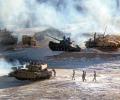
While tensions have eased at several friction points and mechanisms for managing the boundary have been reactivated, underlying differences persist. Disputes over naming practices in Arunachal Pradesh, continued infrastructure development on both sides, and unresolved questions regarding patrolling rights indicate that the structural gap remains, notes Dr Kumar.
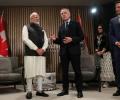
The statement suggests that Canadian authorities do not see ongoing foreign interference or violent activity tied to India at present.

US President Donald Trump has claimed that a significant number of Iranian military officials were killed during a "massive strike" conducted in Tehran.
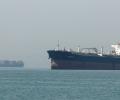
Pakistan's Interior Minister Mohsin Naqvi has been in Tehran meeting with Iranian officials in an attempt to mediate and resolve the ongoing conflict between the US and Iran. This marks Naqvi's second visit in less than a week as Pakistan seeks to bridge the differences between the two nations and establish long-term stability in the region.

Earlier, Israeli Prime Minister Benjamin Netanyahu also declared that Iran would never be allowed to acquire nuclear weapons, regardless of any agreement.

Pakistan's Prime Minister Shehbaz Sharif has offered to mediate between the US and Iran to de-escalate the ongoing conflict in West Asia, following a joint US-Israel attack on Iran. Sharif has been in contact with Saudi Arabia, the UAE, and other nations to promote dialogue and diplomacy.
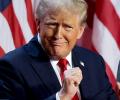
US President Donald Trump announced that a deal to end the war with Iran would be signed on Sunday, with the strategic Strait of Hormuz immediately becoming 'open to all'. This follows indications from Pakistan that negotiations were in their final stages, though Iran has yet to comment on the timeline.

India and China held constructive talks on the situation along the Line of Actual Control (LAC) in eastern Ladakh, emphasising that maintaining border peace and tranquillity enabled progress in normalising overall relations.

National Security Adviser Ajit Doval held "constructive" talks with Chinese Foreign Minister Wang Yi in New Delhi, focusing on the normalisation of bilateral ties. The discussions reviewed recent developments and progress towards rebuilding trust after the eastern Ladakh border standoff. Both sides have implemented measures, including disengagement pacts and high-level meetings, to improve relations.

Poland's Secretary of State, Wladyslaw T Bartoszewski, has credited Prime Minister Narendra Modi with preventing Russian President Vladimir Putin from using tactical nuclear weapons in Ukraine in late 2022, highlighting Modi's significant influence on the Russian leader.

Indian markets on Dalal Street rallied sharply as easing tensions in the US-Iran conflict and stable oil prices boosted sentiment. Track Nifty 50 and BSE Sensex performance and key global triggers.

The Nepalese foreign minister was speaking to the media a day after holding wide-ranging talks with his Indian counterpart S Jaishankar that focused on ways to further expand ties in diverse sectors, including trade, critical technology, connectivity and energy.

India and the US are reportedly exploring a potential meeting between Prime Minister Narendra Modi and US President Donald Trump on the sidelines of the G7 summit in France next week, aiming to rebuild bilateral ties after recent tensions.

India too can rise to the top if the 1.4 billion Indians back home are given better opportunities to use their innate talent and capacity to work hard, with right incentives in a more meritocratic rules-based system, asserts Ajay Chhibber.

The US Senate passed a resolution directing then-President Donald Trump to withdraw American forces from the conflict with Iran. This bipartisan vote, though largely symbolic as a concurrent resolution, highlighted congressional concerns over potential escalation and a desire to limit presidential military authority without legislative approval.

Ebrahim Azizi, head of Iran's National Security Committee, stated that diplomatic talks with the US are governed by national interest and security, viewing negotiations as an extension of military efforts.

Donald Trump expressed optimism about securing an agreement with Tehran to prolong a truce and restore transit through a strategic maritime chokepoint within the next week, even as he criticised political opponents and the media for what he described as their tendency to distort outcomes, even in a hypothetical scenario of complete Iranian military surrender.

A senior Pakistani official has affirmed Pakistan's commitment to supporting Saudi Arabia, even before assistance is explicitly requested, amidst ongoing conflict in West Asia. This pledge underscores the close ties between the two nations and Pakistan's role in regional stability.

The visit was expected to project Assam as the gateway to Southeast Asia and reinforce the state's emergence as a preferred investment destination.

Former US President Donald Trump claimed that Iran has agreed to return its "nuclear dust" to the United States as part of broader assurances not to pursue nuclear weapons. He expressed optimism about ongoing negotiations and a potential deal.
Pakistani Prime Minister Shehbaz Sharif is actively engaged in diplomatic efforts to de-escalate tensions in West Asia, offering to host talks between the US and Iran and engaging with regional leaders to promote peace and stability.

Iran's ambassador to India, Mohammad Fathali, has described India as a "reliable and compassionate" partner while asserting Tehran's territorial authority over the Strait of Hormuz amidst ongoing regional tensions.

Pakistan has intensified its efforts to bring the US and Iran back to the negotiating table to end the war in West Asia, following President Trump's extension of the ceasefire. Pakistani officials have engaged with Iranian, Turkish, and British counterparts to promote dialogue and diplomacy for a peaceful resolution.

Iranian Foreign Minister Abbas Araghchi is in India for a BRICS foreign ministers' meeting, where discussions will focus on the escalating crisis in West Asia and its impact on global energy supply chains.

Speaking to reporters during a cabinet meeting at the White House on Thursday, Trump said the US had engaged in 'very substantial talks' with Iranian officials and described the tanker movement as proof of seriousness in the discussions.

Pakistan Prime Minister Shehbaz Sharif on Thursday signed the historic peace deal between the United States and Iran as a guarantor; the agreement will see the immediate reopening of the Strait of Hormuz and the lifting of the US naval blockade.

Russian President Vladimir Putin and Chinese President Xi Jinping have reaffirmed their commitment to dismantling global hegemonism and building a 'multipolar world' during high-level talks in Beijing.
